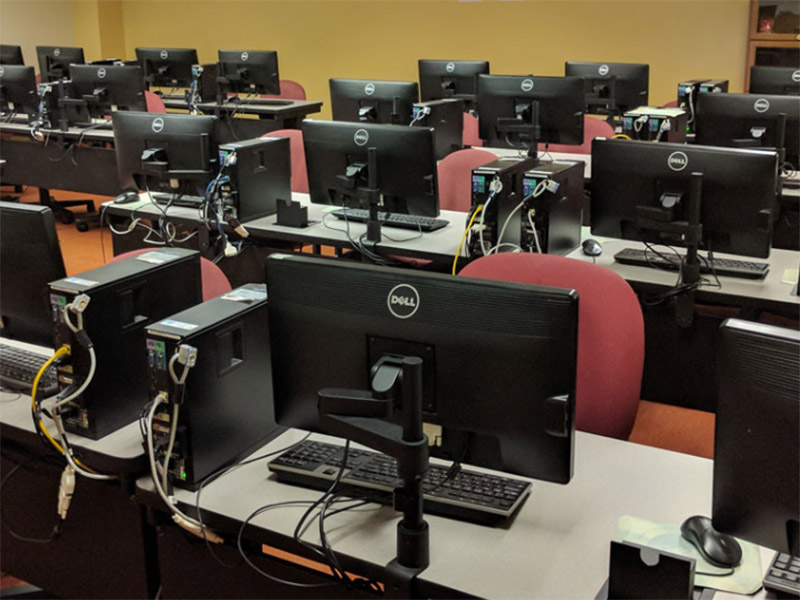
Program Overview
The Master of Science (MS) in Cybersecurity program is designed to develop the professional skills to work beyond the entry-level jobs in cybersecurity. The program combines applied coursework with hands-on practicum-based learning which include Applied Cryptography, Secure Systems Architecture, Securing Operational Technology, AI/ML for Security Analytics, and Cyber Risk and Governance.

137,783
Currently Employed

$124,904
Average Salary

3,011
Monthly Job Postings
Hands-On Skill Development

Security Engineering

Security Architecture

Threat Intelligence

PEN Testing
Career Paths

Cybersecurity Engineer
Develop security tools and set policies that help protect systems, networks, and data.

Cyber Crime Analyst
Analyze and examine all types of malicious software and how they are delivered.

Security Architect
Assess an organization’s computer systems for weaknesses and then design security protocols to address them.
Why Get a Master’s Degree in Cybersecurity?
Needed Demand
- There is approximately 3.5 Million cybersecurity-related vacancies globally
- Only 74% of cybersecurity roles in the U.S. are staffed with qualified professionals


We Meet Employer Needs
- Hands-on labs using real-world data
- Training and certification
- Security engineering
- Security architecture
Advancing Your Career
- Increasing your value to your organization
- Professional skill development
- Developing a network of peers with the highest levels of expertise

Research Excellence